
.png&w=2048&q=75)
In 2026, AI has moved beyond experiments and side tools. It is now part of how companies run operations and make decisions. Instead of isolated use cases, AI is being applied across full workflows, with more autonomous systems taking on tasks that used to need constant human input.
The results are uneven. Only about 5% of companies have achieved substantial financial gains so far, but those leaders are already seeing four times higher shareholder returns. The issue is no longer access to AI, but how companies approach it. A clearer way to think about AI transformation is needed to guide investment and execution.
What AI Transformation Looks Like in 2026?
AI in 2026 is not just evolving in capability, but in how it is applied inside businesses. The shift is less about new tools and more about how companies are reorganizing around AI to drive real outcomes.
What Is AI Transformation in 2026 (Redefinition)
Most companies have already used AI in some form. Chatbots, copilots, small automations—none of that is new anymore. AI transformation in 2026 is no longer about adding tools or running pilots. It is about integrating AI across the entire business, from operations to business models and workforce. The focus is on measurable outcomes such as revenue growth, efficiency, and competitive differentiation.
This also means moving beyond isolated use cases. AI is now applied across full workflows, where systems can support or even take over multiple steps in a process. As a result, companies are shifting from experimentation to scaled execution, with clearer expectations on impact and performance.
Key Trends Defining AI Transformation in 2026
Several trends define how AI transformation is taking shape in 2026. These shifts are not happening in isolation, but together they show how companies are changing both strategy and execution.
- Agentic AI takes center stage: Around 40% of enterprise apps are expected to include task-specific agents, up from under 5% in 2025. These can handle workflows like forecasting, procurement, or customer support, with human oversight.
- CEO-led strategy and centralized execution: CEOs are now leading AI decisions. Companies are moving to centralized “AI studios” and focusing on a few high-ROI use cases instead of scattered pilots.
- Workforce drives most of the value: Technology alone does not create impact. About 70% of the impact comes from people, not tech. This includes upskilling over half of employees and redesigning roles to work with AI.
- Responsible AI becomes operational: Governance is moving from principles to real systems. Companies are setting up testing, monitoring, and benchmarks tied to business performance.
- Physical and multimodal AI expands: AI is moving beyond software into real-world environments. Especially in Asia, with cobots, drones, and edge AI used in manufacturing and logistics.
AI in 2026 is Starting to Show Real Business Impact
AI is no longer just a capability story. The question now is what it actually delivers in real operations, and the data shows that value is already there, though not evenly distributed across companies.
Hard Numbers: What AI Is Delivering
The most immediate impact shows up in productivity. Around 66% of organizations report measurable gains, especially in roles with repetitive workflows. In many cases, AI systems can handle up to 70% of routine inquiries, which reduces manual workload and significantly improves output per employee.
Cost is the second area where results are clear. About 58% of businesses report reductions driven by automation and fewer operational errors. In banking, AI-based fraud detection systems can cut fraud cases by up to 90%, reducing both financial loss and investigation costs. Revenue impact is still developing, but around 74% of companies already see AI as a driver for growth, especially through better customer experience and new service models.
Real-World Examples (Global + Vietnam-Relevant)
The difference becomes clearer when looking at how companies apply AI in practice. In global markets, AI is already running parts of core workflows, not just supporting tasks. Klarna uses AI to handle about two-thirds of customer service chats, replacing the workload of around 700 agents and reducing repeat inquiries. Salesforce reports that AI agents can handle up to 85% of internal support requests and cut response time significantly. In supply chain operations, companies like Amazon use AI to update forecasts and inventory decisions continuously instead of relying on fixed plans.
In Vietnam, similar patterns are emerging, but with a more focused approach. FPT uses AI to handle around 70% of customer service inquiries, which has clearly increased productivity per employee. At the same time, platforms like AI Factory are being built to scale deployment across projects. Viettel and VNPT are investing in their own AI systems, including facial recognition platforms that process billions of authentication requests.
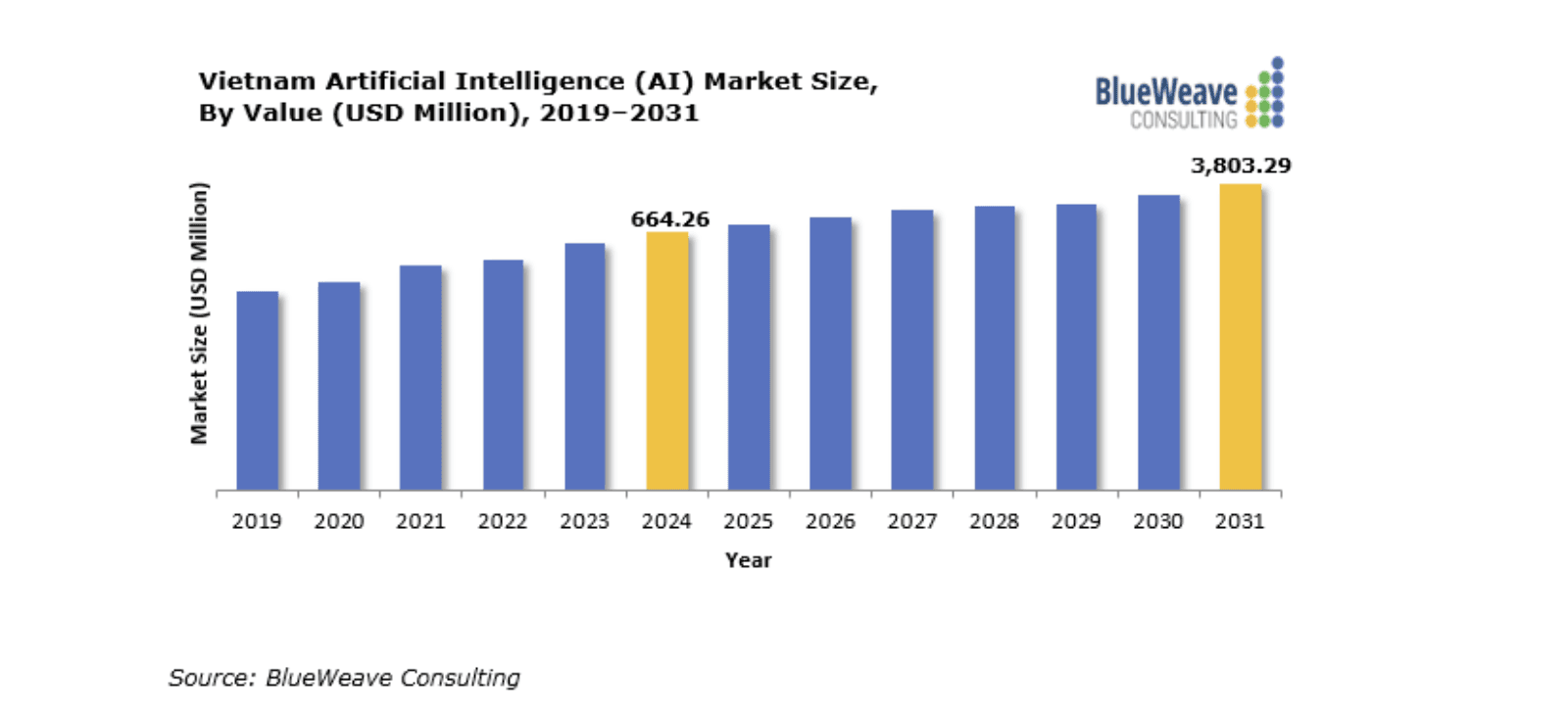
The banking sector shows some of the clearest measurable impact. AI is improving performance by around 27–35%, especially in fraud detection and personalized services. Both speed and accuracy matter here, so the gains are more visible. At the same time, around 61% of Vietnamese businesses report improvements in operations or revenue, showing that AI is already moving beyond early adoption.
Why Most AI Initiatives Still Fail
Despite the clear wins documented in the previous section, the majority of AI efforts still fall short of delivering transformational value. Why?
The ROI Gap Between Expectation and Reality
CEOs today have absorbed a decade of messaging about AI’s transformative potential. Many entered 2026 expecting that their AI investments would already be showing up in margin expansion and revenue acceleration. For most, that has not happened. The disconnect comes down to how AI is funded and measured. When AI is treated as a technology budget line item, success is measured in model accuracy or the number of pilots launched. But those metrics do not translate to business outcomes.
Companies that fail to tie AI initiatives directly to P&L from the start rarely see the returns they hoped for. The ones that do—the 5% capturing outsized gains—measure every project against cost, revenue, or speed from day one. Without that discipline, even technically successful pilots remain isolated and never deliver the enterprise‑wide impact that boards are demanding.
The Skills and Culture Barrier
The single biggest obstacle cited by executives in 2026 is the AI skills gap. But the shortage is not just about data scientists or machine learning engineers. It is about managers and frontline workers who know how to work alongside AI systems. Most organizations have added AI tools on top of existing roles and expected people to figure it out, leading to confusion, resistance, and underutilization.
Manager adoption is particularly low. When leaders do not understand how to set goals for AI‑augmented teams or evaluate performance in a human‑AI collaboration model, the whole effort stalls. Culture also matters. In companies where experimentation is discouraged or failure is punished, AI never scales past the pilot stage.
Governance and Data Foundations
Another common failure point is the underlying data and infrastructure. Legacy systems were not built for the real‑time, cross‑functional data access that agentic AI requires. Many companies still struggle with data silos, inconsistent formats, and poor quality, especially when local data is involved. In Vietnam, local language data, regulatory requirements, and the need for sovereign infrastructure add layers of complexity that generic global solutions do not address.
Governance is equally problematic. Responsible AI is still treated as a compliance checklist rather than an operational discipline. Without automated testing, continuous monitoring, and clear accountability, AI systems drift over time, and companies lose confidence in scaling them. Companies that deploy AI without modernizing data foundations often find their agents making errors or delivering unreliable outputs.
Workforce and Role Design Gaps
The final reason most AI initiatives fail is that they ignore the human side of transformation. Technology accounts for only about thirty percent of the value. The rest comes from how work is redesigned and how people are supported. Few companies have created the new roles needed to sustain AI at scale, such as AI operations managers, prompt engineers, and human‑AI collaboration leads.
Without these roles, the work of managing and improving AI systems falls to teams already stretched thin, and momentum fades. Reskilling is also often treated as optional. When less than half of employees receive formal training on how to work with AI, adoption remains patchy. The companies that succeed make reskilling a non‑negotiable part of their strategy and protect time for learning.
Most companies agree with that point in theory, then go buy an AI platform and expect their people to figure out the rest. The missing piece isn't more training or new job titles. It's a fundamentally different way of adding AI to work. We call it AI Augmented Services.
We do something different. Our AI Augmented Services run on a proven logic that helps you avoid the usual trial and error. You get 30% lower cost, 40%~50% faster delivery, better quality, higher ROI with a working system that fits your business.
AI Transformation Strategy in 2026: How Businesses Actually Win
AI is not a software implementation. It’s a workforce + operating model overhaul. If AI fails because of execution, then the difference comes from how companies structure it from the start. The ones that actually see results do not treat AI as a side initiative. They define it at the business level, limit the scope, and push it deep into a few workflows instead of spreading it across the organization.
1. CEO-Led Strategy
The first move is structural. AI cannot succeed if it lives inside the IT budget with no direct line to profit and loss. In successful organizations, the CEO takes ownership, aligning AI to a short list of strategic priorities that actually move the needle on cost, revenue, or speed. Instead of funding dozens of small experiments, they create a centralized AI studio that concentrates resources on three to five high‑impact workflows. This discipline forces teams to focus on what matters and prevents the common trap of spreading investment too thin.
2. Put People First (70% of the Value)
Technology and algorithms contribute only about thirty percent of the gains. The rest comes from reskilling more than half the workforce, redesigning roles, and creating new ways for humans and AI to collaborate. Leaders in this space make reskilling a non‑negotiable part of their strategy. They protect time for learning, model AI adoption from the top, and intentionally build human‑AI teams where people handle judgment and relationship work while agents handle routine tasks.
3. Execute with Agentic AI
The rule among successful companies is 80 percent process redesign, 20 percent tech. Mapping how work flows today and reimagining it for human‑AI collaboration matters more than picking the perfect vendor. Set benchmarks early, test rigorously, and orchestrate across multiple platforms instead of locking into one.
4. Build Strong Foundations
Legacy systems can’t support real‑time, cross‑functional data. Winners invest in cleaning silos, standardizing formats, and making local data usable. They embed responsible AI from the start as automated tests and monitoring tied to business outcomes, not a compliance checklist. That builds confidence to scale.
5. Scale Responsibly
Do not boil the ocean. Pick one high‑impact workflow, redesign it, prove ROI, then expand fast. This creates templates that can be reused across the organization and builds credibility for the next wave of projects.
For Vietnam and Asia‑Pacific, there is a real advantage. Government momentum from the national AI strategy, public‑private computing partnerships, and the new Law on AI, combined with local talent and digital adoption, offers a chance to leapfrog legacy constraints. The window is open, but it will not stay open forever.
Conclusion
AI transformation in 2026 isn’t about strategy decks. It’s about one question: which workflow gets an AI agent first?
We help you answer that – and build it. AI Augmented Services means we don’t sell software. We redesign one process, add agents where they earn their keep, and show you the numbers. If you want to see whether this works for your business, book a thirty-minute conversation about one workflow. We will be honest about what AI can and cannot do.
👉 [Talk to us about your first workflow] – 30min, no pitch deck.